
Cheeseburger Pie: A Family-Style Dinner That Tastes Like a Classic Burger
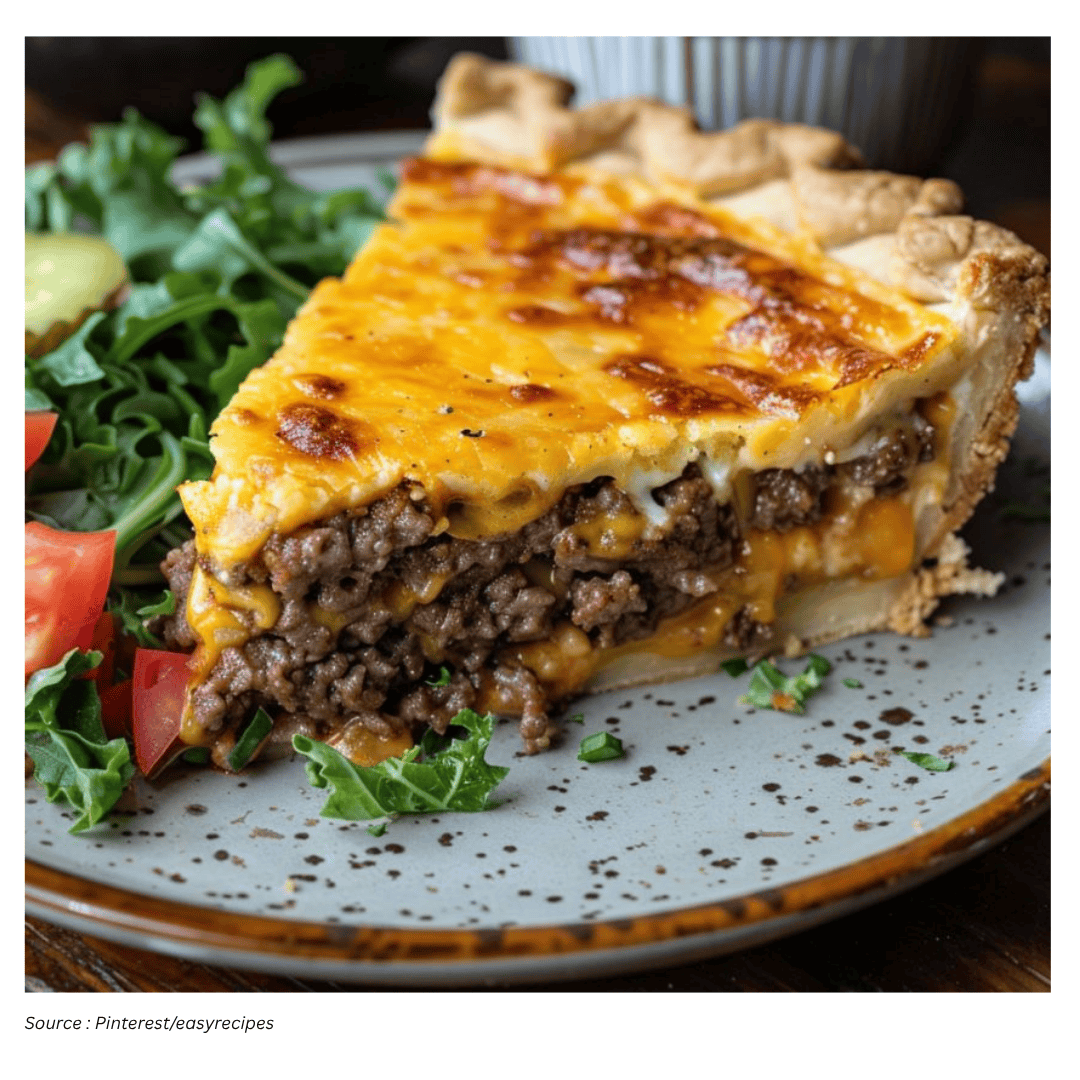
A cheeseburger, reimagined as a pie
Some dishes stick with you because they’re tied to a specific time—childhood dinners, family gatherings, or the first meal you learned to cook well. Cheeseburger pie fits neatly into that category for many home cooks: it’s familiar, comforting, and built from ingredients that feel instantly recognizable. Think of it as a cheeseburger translated into a sliceable, bake-and-serve format. You still get the core elements people crave—savory ground beef, melted cheese, and that satisfying “bun” component—only here the bun becomes a golden pie crust and the burger is served casserole-style.
What makes this approach so appealing is how it balances nostalgia with practicality. It’s hearty enough to satisfy adults, approachable enough for kids, and simple enough to become a repeat dinner. In feedback from home kitchens, it’s often described as “easy to make” and the kind of recipe that quickly becomes a regular in the rotation—monthly for some, weekly for others.
Why this dinner works for busy schedules
Cheeseburger pie succeeds because it’s structured like a classic baked dish: a crust base, a savory meat layer, and a rich topping that sets in the oven. That structure makes it forgiving, easy to portion, and easy to plan around. It also holds up well after baking, which matters if you’re feeding a household on different schedules or you want leftovers that reheat without falling apart.
It’s also a recipe with a clear “logic” behind it. The meat and cheese deliver the burger flavor, the sauce functions like ketchup, and the crust stands in for the bun. Once you understand that framework, you can adapt it to match your own favorite burger style without losing what makes the dish work.
The basic building blocks
While the full ingredient list belongs in a dedicated recipe card, the method makes it clear what the essentials are. The pie is built from two main components:
- A pie crust (homemade or store-bought), pressed into a 9-inch pie plate and chilled before filling.
- A layered filling made from browned ground beef plus a cheesy egg-and-milk mixture seasoned with Worcestershire sauce, salt, and dry mustard.
The filling is assembled in two stages: first the beef mixture is cooked and spread into the crust, then a beaten mixture of milk and egg—seasoned and combined with cheese—is spread evenly over the meat. The result is a cohesive slice that tastes like a cheeseburger in baked form.
Step-by-step overview: from crust to oven
This dish can be made with a homemade crust, and the process is straightforward if you’ve ever made pie dough. The method begins by pulsing dry ingredients, then adding cold butter and pulsing until the mixture resembles a coarse meal. An egg yolk is added and pulsed just until the dough comes together. From there, the dough is formed into a ball, wrapped, and chilled for an hour. (Some cooks like to make extra dough and divide it into two balls for later use.)
Once chilled, the dough is rolled out and pressed into the bottom and sides of a 9-inch pie plate. A little attention here pays off: press gently so you don’t puncture the dough, then trim the overhang to about 1 ½ inches and crimp the edges. The crust goes back into the refrigerator while the filling is prepared, which helps it hold its shape once it hits the heat.
The filling starts on the stovetop. Ground beef is browned in a skillet, then the remaining filling ingredients are stirred in. That beef mixture is poured into the prepared pie plate and smoothed into an even layer.
Next comes the topping mixture: milk and egg are beaten together, then Worcestershire sauce, salt, dry mustard, and cheese are stirred in. This is spread evenly over the meat layer. The pie is baked at 425°F for about 30 minutes, or until done.
How to keep the bottom crust from getting soggy
Savory pies live or die by their crust texture. Because cheeseburger pie bakes with a moist filling, it’s fair to wonder whether the bottom crust will soften. The bake time is typically long enough that it “shouldn’t be a problem,” but there are two practical techniques that can help protect the crust:
- Brush the bottom crust with egg wash. This creates a thin barrier between the liquid filling and the dough.
- Bake the pie on a baking sheet. The extra heat conduction from the sheet can help the bottom bake more thoroughly.
These small steps are especially useful if you’re using a particularly juicy beef mixture or if your refrigerator-to-oven timing varies.
Customization ideas: build your “favorite burger” version
One reason this recipe earns repeat status is that it’s easy to customize without changing the core technique. After all, burgers are personal: some people want pickles and lettuce, others want onions, and many want bacon. Cheeseburger pie accommodates that same range of preferences.
After baking, you can add classic burger-style toppings such as shredded lettuce, tomatoes, pickles, bacon, or even a drizzle of burger sauce. The dish is also flexible during the cooking stage. Home cooks have successfully mixed diced onion into the ground beef, and others have taken it a step further by caramelizing sweet onions and layering them between the beef and cheese. If you go the caramelized route, one caution is worth repeating: make sure the onions are fully caramelized, because excess water can affect the consistency of the filling.
There’s also room for “use what you have” substitutions. Some cooks choose store-bought crust for convenience. Others adjust the sauce element based on pantry availability, or adapt the dairy component when milk isn’t on hand. The overall concept—savory beef base plus a seasoned, cheesy topping—remains the same even when the details shift.
Planning ahead: make-ahead and freezer options
This is the kind of recipe that fits neatly into meal prep. If you want to get ahead of the week, you can prepare the filling in advance and refrigerate it for up to 2 days. The pie crust can also be made ahead of time, which means you can split the work across multiple days: dough one day, filling the next, bake when you’re ready.
Freezing is also part of the plan for many households. The pie can be frozen for up to a month in advance. When baking from frozen, it will take an additional 20–25 minutes. To prevent the top from browning too quickly, cover the pie as it bakes.
For those who like to stock the freezer when ground beef is on sale, this approach can be especially convenient: assemble ahead, freeze, then bake when you need a no-fuss dinner.
Cooling, slicing, and serving
Like many savory pies, cheeseburger pie benefits from a short rest after it comes out of the oven. Let it cool for about 15–20 minutes before slicing. This cooling window allows the filling to set, which makes the portions cleaner and the slices easier to lift.
It’s satisfying on its own, but it can also be paired with sides if you want to round out the plate. Because the pie already delivers meat, cheese, and crust, many people keep sides simple and fresh, or choose something that complements a burger-style dinner.
Storing leftovers and reheating without drying it out
One of the advantages of this dish is how well it keeps. Leftovers can be stored in an airtight container in the refrigerator for up to 5 days, or frozen for up to 3 months.
For reheating, the oven method is designed to warm the filling evenly while protecting the crust and top. Preheat the oven to 350°F, place the pie on a baking sheet, cover with foil, and bake for about 20 minutes or until the filling is bubbling. The foil helps prevent over-browning and keeps the top from drying out.
Ingredient and technique notes from home kitchens
Part of what makes a recipe endure is how it performs in real kitchens, not just in ideal conditions. Cheeseburger pie has inspired a range of practical questions and tweaks that highlight what matters most:
- Cold butter matters for the crust. If you’re making the dough yourself, cold butter helps create the right texture.
- Use cold tap water for the dough. The goal is to avoid warming the fat; hot water is not recommended.
- Store-bought crust can work. It’s a common time-saver and still produces a satisfying result.
- Onions can be added in different ways. Diced onions mixed into the beef add flavor; caramelized onions layered in bring sweetness, but should be cooked down well to avoid excess moisture.
Other variations reflect the same spirit of flexibility. Some cooks have mixed alternative sauce elements when they didn’t have the standard option available. Others have adjusted the dairy component when milk wasn’t in the refrigerator. There are also examples of adding vegetables, such as frozen peas, directly into the ground beef mixture for a slightly different profile.
For anyone who likes to experiment, one idea mentioned by home cooks is to try a different flavor direction next time by substituting salsa for tomato sauce and adding taco spices. The method remains the same, but the flavor shifts—an example of how the basic “burger pie” structure can support new interpretations.
A reliable comfort meal with room to make it your own
Cheeseburger pie lands in that sweet spot between comfort food and practical weeknight cooking. It’s recognizable and satisfying, yet structured enough that it slices cleanly and stores well. It can be made with a homemade crust when you want a project, or with a store-bought crust when you want dinner on the table with minimal fuss.
Most importantly, it invites personalization. Add pickles after baking, layer in caramelized onions, crisp up some bacon, or keep it simple and classic. However you approach it, the goal stays the same: deliver the flavors people love in a format that’s easy to bake, serve, and enjoy again the next day.