
Italian Braciole: A Comforting Beef Roll Simmered in Tomato Sauce
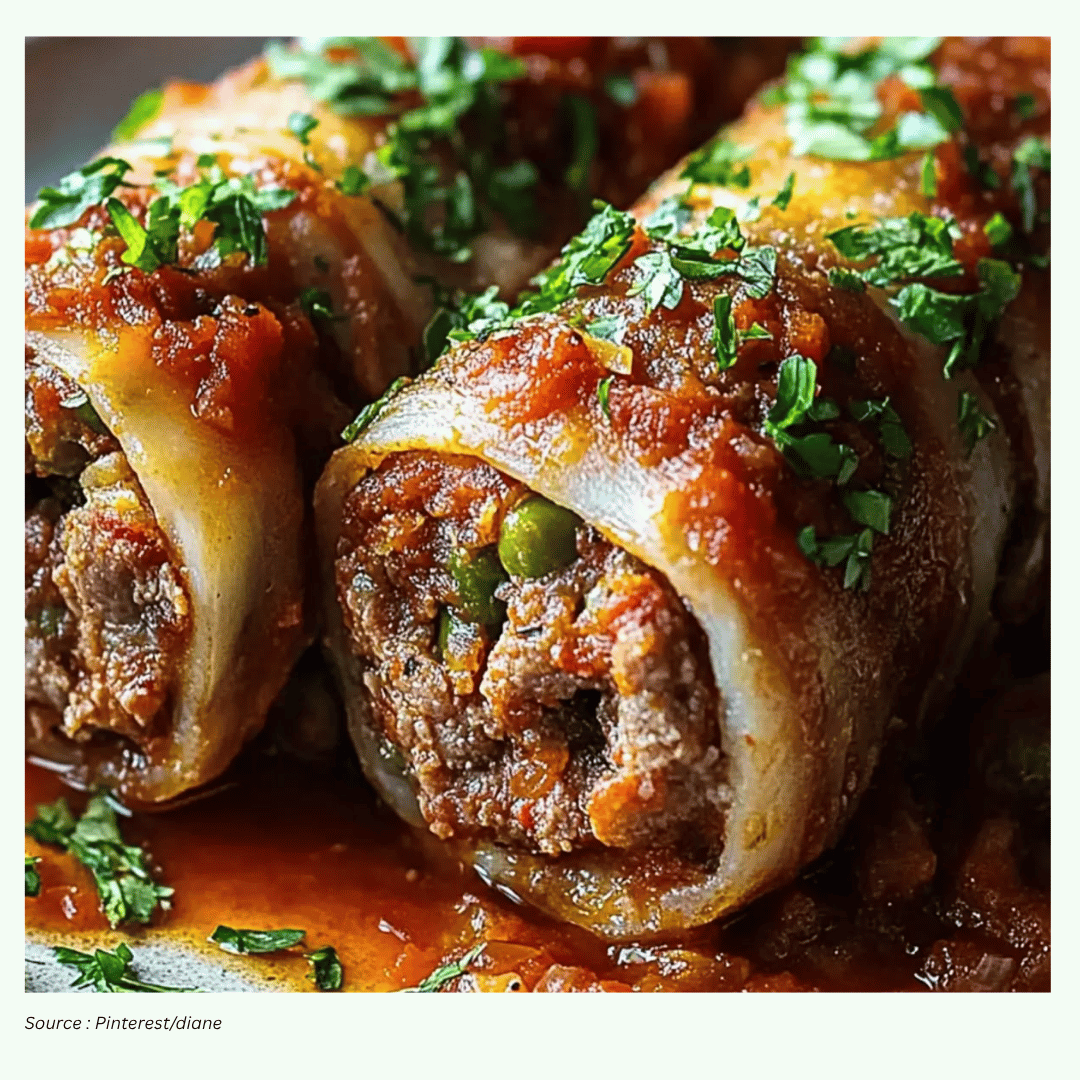
A classic Italian comfort dish built around slow cooking
Italian braciole is one of those dishes that feels bigger than the sum of its parts. At its core, it’s simply meat rolled around a flavorful filling, browned, and then simmered gently in sauce for hours. But the result—tender slices of beef surrounded by a savory breadcrumb-and-cheese center, all coated in tomato sauce—lands firmly in “special occasion” territory even when the process is straightforward.
This version centers on beef braciole made with flank steak, stuffed with a mixture of breadcrumbs, cheese, herbs, and pancetta, then cooked low and slow in marinara sauce with red wine. It’s the kind of hearty meal that pairs naturally with pasta or a piece of crusty bread meant for swiping up every last bit of sauce.
What braciole is, and why it’s so adaptable
Braciole is an Italian dish made from thin slices of meat—commonly beef, but also chicken or pork—that are rolled into a roulade, filled (often with cheese and breadcrumbs), seared, and then slow cooked in sauce. There are many variations, and that flexibility is part of its appeal. The method stays consistent, while the filling and even the cooking approach can shift depending on what you have and how you like to cook.
For beef braciole, cuts like beef rump, top round, or bottom round are often considered ideal. Flank steak also works well, particularly when it’s pounded thin so it can roll neatly around the filling and become tender during the long cook.
The flavor foundation: pancetta, cheese, herbs, and a tomato-wine sauce
The filling here is designed to be bold without being complicated. Pancetta is cooked until crispy, then combined with breadcrumbs, cheeses, parsley, and pepper. That mixture becomes the center of the roll, delivering salty, savory flavor in every slice.
The sauce is intentionally simple. After the beef is browned, red wine is added and brought to a boil, and then marinara sauce is stirred in. The dish then finishes in the oven, covered, so the beef can soften and the flavors can meld. While homemade sauce can be used, this approach specifically notes that store-bought marinara works well and may not be noticeably different from homemade for the extra effort involved.
Step-by-step overview (with the key techniques)
The full ingredient list is typically provided separately in a recipe card, but the main workflow is clear and repeatable. Here’s the process in a practical sequence, highlighting the techniques that matter most.
- Cook the pancetta and aromatics: Cook pancetta in oil until crispy. Add onions, red pepper flakes, and garlic, and cook until the onions turn translucent.
- Make the filling: Mix breadcrumbs, cheeses, parsley, and pepper. Stir in the pancetta mixture so the flavor is distributed throughout.
- Prepare the beef: Pound flank steak to about 1/4-inch thickness. This step helps the steak roll properly and encourages tenderness after the long cook.
- Roll and tie: Roll the flank steak tightly from the short end. Secure it with butcher’s twine, then season with salt and pepper.
- Brown the beef: In a Dutch oven, brown the stuffed beef roll in olive oil until it’s browned on all sides. This searing step builds flavor that carries into the sauce.
- Deglaze and sauce: Add wine, bring it to a boil, and stir in marinara.
- Slow cook in the oven: Cover and bake at 350°F for 2 hours, basting every 30 minutes. When done, remove the twine, slice diagonally, and serve with sauce.
One practical note surfaced in discussion around the method: the Dutch oven is covered for the initial long bake, and then the lid can be removed for an additional 30 minutes. This helps manage the sauce texture while still giving the meat time to finish tenderizing.
Oven vs. slow cooker: two reliable paths to tender braciole
One of the strengths of braciole is that it adapts well to different cooking styles. The oven method is classic: a covered Dutch oven creates a steady, moist environment where the beef can break down gradually. But a slow cooker can work just as well, especially if you want a more hands-off schedule.
The slow-cooker approach keeps the same essential first step—browning. After searing the stuffed beef roll, transfer it to a slow cooker, add the sauce, and cook on low for 6 to 8 hours. A higher setting can shorten the timeline (3 to 4 hours on high), but the low setting is often preferred for a gentle finish.
Either way, the goal is the same: give the meat enough time in sauce to become tender and easy to slice.
Choosing marinara and wine: what matters most
This braciole approach leans on two convenient ideas: first, that a store-bought marinara you already like can be a smart choice; and second, that the flavor payoff comes heavily from the browning step and the red wine in the sauce.
If you’re using wine in a sauce, the guidance is simple: pick a quality dry red wine that you’d actually drink. Options like Chianti or Pinot Noir are commonly used. The wine is brought to a boil before the marinara goes in, helping it integrate into the sauce and carry the browned flavors from the pot into the final dish.
Make-ahead options for easier hosting (or weeknight planning)
Braciole is well-suited to planning ahead. You can assemble the rolls and refrigerate them for up to 24 hours before cooking. That means you can do the pounding, filling, rolling, and tying earlier in the day—or even the day before—then cook when you’re ready.
You can also cook the dish fully, store it in the refrigerator, and reheat before serving. Because the braciole sits in sauce, it tends to reheat well when handled gently.
Serving ideas: what to put on the plate
Because braciole is cooked in a rich tomato sauce, it naturally calls for a side that can soak up that sauce. Pasta is an obvious match, but it’s not the only one. Several side options work well, especially if you want something a little different from the standard spaghetti pairing.
- Garlic mashed cauliflower
- Goat cheese polenta
- Crispy roasted potatoes
- Goat cheese risotto
- Cream cheese mashed potatoes
Another simple approach is to serve with crusty bread, which turns the sauce into part of the experience rather than just a topping.
Ingredient flexibility: adjusting the filling to your taste
As with many traditional recipes, braciole invites small adjustments. The filling here includes cheese, and while parmesan is commonly used, it isn’t the only option. If you don’t like parmesan, you can substitute another cheese; an equal amount of provolone is noted as a workable swap. The key is to keep the filling cohesive and flavorful so it holds together once the braciole is sliced.
Even with flexibility, the structure remains the same: a breadcrumb-and-cheese base, herbs for freshness, and pancetta for depth. Those elements create a filling that tastes substantial even after hours in sauce.
Managing sauce texture and oven temperature concerns
Long cooking can change the sauce’s consistency. At 350°F, the sauce may thicken over time, especially if the pot is uncovered toward the end. Some cooks may find the sauce becomes thicker than expected, but the trade-off is that the heat also helps break down the meat. Basting every 30 minutes during the covered bake helps keep the surface moist and ensures the roll stays coated in sauce.
If you prefer a looser sauce at serving time, reheating with a bit of extra marinara is a simple way to adjust without changing the core method.
How to store and reheat braciole without drying it out
Braciole stores well because it’s kept with sauce, which helps protect the meat. Store leftovers in an airtight container with sauce in the refrigerator for up to 4 days, or freeze for up to 3 months.
For reheating, gentle heat is the priority. Warm it slowly in a saucepan over low heat with extra marinara to keep it moist, or cover and bake at 300°F until heated through. Microwaving is best avoided, as it can dry out the meat and make the texture less appealing.
Why this dish keeps earning repeat requests
Braciole has a reputation as a comfort dish for a reason. It’s rich without being complicated, and it rewards patience more than it demands technical skill. The process—stuff, roll, tie, sear, and slow cook—creates a meal that feels celebratory, whether it’s served during the holidays or on a weekend when you want something hearty and satisfying.
It also tends to impress at the table. Slicing the roll diagonally reveals the spiral of filling inside, and serving it with sauce makes the dish look as good as it tastes. It’s no surprise that home cooks often describe it as easy to make with results that feel far more elaborate than the steps suggest.
At-a-glance cooking roadmap
- Core idea: Thin beef rolled around a breadcrumb-cheese-herb-pancetta filling, then browned and slow cooked in marinara with red wine.
- Main oven method: Bake covered at 350°F for 2 hours, basting every 30 minutes; remove twine, slice, and serve with sauce (with an option to finish uncovered for 30 minutes).
- Slow cooker method: Sear first, then cook in sauce on low for 6–8 hours (or high for 3–4 hours).
- Make ahead: Assemble and refrigerate up to 24 hours before cooking, or cook fully and reheat gently.
- Storage: Refrigerate up to 4 days; freeze up to 3 months.
Whether you choose the oven or the slow cooker, the heart of the dish stays the same: a well-seasoned filling, a properly browned exterior, and enough time for the beef to turn tender in a simple tomato-and-wine sauce.