
Classic New England Clam Chowder With Whole Clams and Homemade Broth
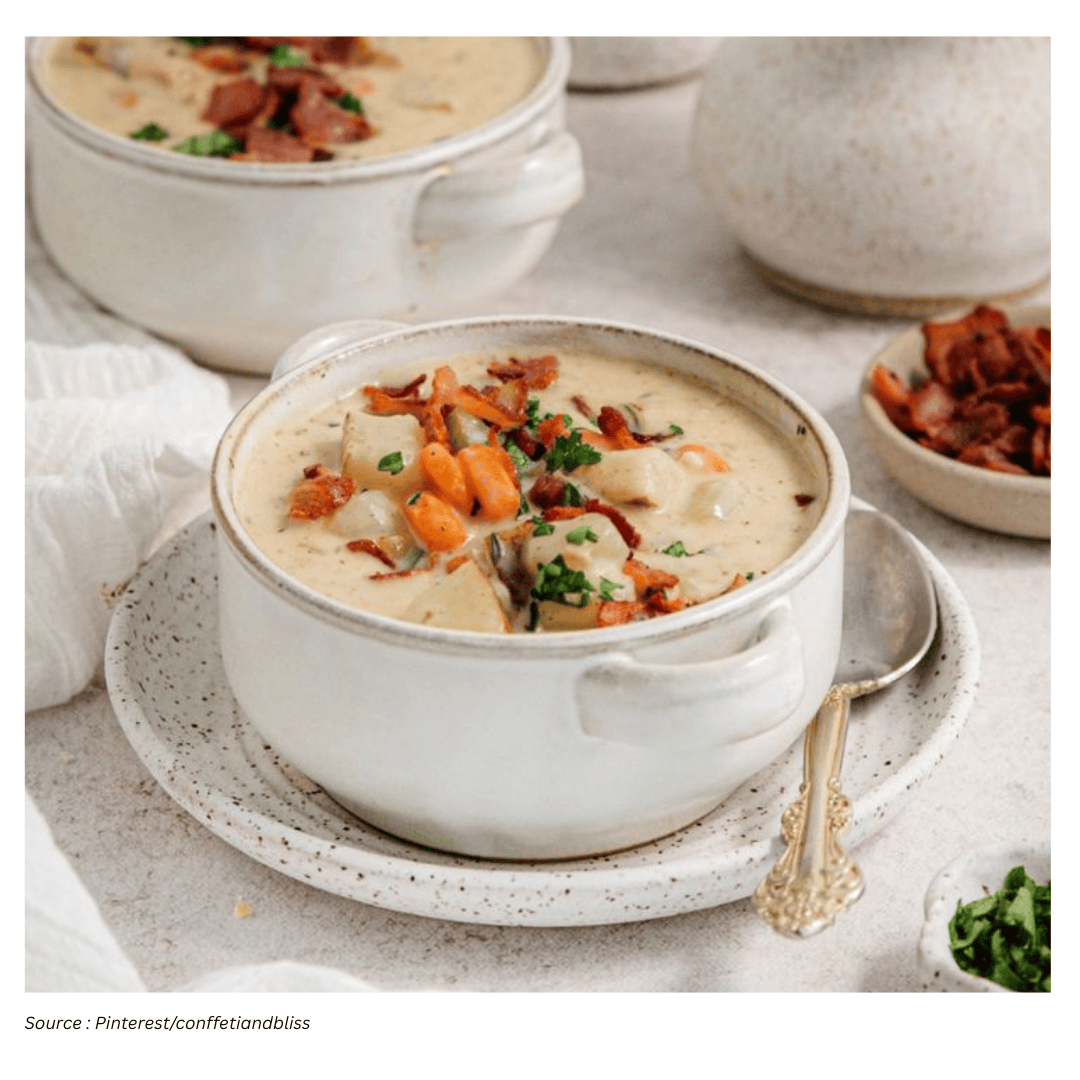
A chowder with deep roots—and a very practical payoff
New England clam chowder has been evolving for centuries. Long before it became a familiar creamy staple, indigenous Americans made shellfish soups that laid the groundwork for what would follow. Over time, European settlers shaped the dish in ways that still echo in contemporary recipes: ship’s biscuits were used to thicken the pot, and the name itself likely traces back to old culinary and trade terms. One theory points to chaudière, a type of cooking pot; another nods to “jowter,” a 16th-century word for fishmonger. However the language arrived at “chowder,” the dish continued to shift as ingredients became more available and tastes changed.
Eventually, dairy products like cream and butter replaced bread-based thickeners, and by the 19th century potatoes had become a standard part of the mix. That history matters because it explains why New England clam chowder is both hearty and comforting: it’s a soup designed to be filling, warming, and built around ingredients that can stretch and satisfy.
This version leans into that tradition while emphasizing freshness. It uses whole littleneck clams and a homemade clam broth—two choices that make the final bowl taste more directly of the sea while keeping the classic creamy, chunky profile that defines the style.
What makes this approach distinctive
Many New England clam chowders use shucked and chopped clams, and plenty of recipes rely on bottled clam juice or canned clams for convenience. This recipe takes a more hands-on route: the clams are steamed in a simple aromatic liquid, and that cooking liquid becomes the base of the chowder. Leaving the clams in their shells is optional in the broader chowder universe, but here it’s a deliberate choice. The shells add visual impact at the table, and they also help maximize flavor extraction while the clams steam.
The broth-building step is more than a flourish. As the clams open, they release briny juices that mingle with onion, fennel, celery, salt, and black peppercorns. That seasoned clam broth is then strained carefully—twice—so it contributes clean, concentrated flavor to the finished soup.
There are a few other points worth noting. Bacon stands in for salt pork, which is traditional in some chowders but less common as an everyday staple. Thyme appears in the pot even though a bay leaf is more typical; you can add a bay leaf if you like. And fennel, while not strictly traditional, is included here and has been endorsed by Andrew Zimmern as a welcome addition in chowder-style preparations.
Ingredients overview
This chowder is built in two phases: first you steam the clams and create the broth; then you assemble the soup with bacon, aromatics, dairy, and potatoes before returning the clams to warm through.
- For steaming clams and making broth: littleneck clams, water, onion, fennel, celery, salt, black peppercorns
- For the chowder: bacon, butter, onion, celery, fennel, garlic, flour, chicken broth, heavy cream, hot sauce, Worcestershire sauce, red potatoes, parsley, thyme
Red potatoes are a natural fit for chowder because they hold their shape well, supporting the “chunky” identity that separates chowder from smoother soups. The hot sauce and Worcestershire don’t turn the dish spicy or sharp on their own; they function as background seasonings that deepen the savory profile.
Step-by-step: how to make the clam broth and chowder
The process is straightforward, but it rewards careful attention—especially when cleaning clams and straining broth. Below is the method as laid out in the recipe, organized into a clear workflow.
1) Clean the clams
- Rinse the clams in cold water and scrub to remove any dirt or sand.
This is a small step that has an outsized effect on the final bowl. Any grit left on the shells can end up in the broth, so take the time to scrub thoroughly.
2) Steam the clams and build the broth
- Place the cleaned clams in a large pot and cover with water.
- Add onion, fennel, celery, salt, and black peppercorns. Stir to combine.
- Bring to a boil over high heat.
- Once boiling, reduce heat to low and cook for 5 to 10 minutes, or until the clams have opened. Discard any unopened clams.
- Remove the cooked clams from the pot and set aside.
As the clams open, they contribute their own liquid to the pot, enriching the cooking water into a light stock. The aromatics season that stock without overwhelming the shellfish.
3) Strain the broth—twice
- Strain the broth through a fine mesh strainer, discarding the vegetables and peppercorns.
- Strain the broth a second time through paper towels or a coffee filter.
- Set aside.
The second straining is the key to a cleaner chowder. It helps catch fine sediment that can slip through a standard strainer, keeping the broth clear of sand or tiny shell fragments.
4) Start the chowder base with bacon
- Cook the bacon in another large pot or Dutch oven over medium heat until crisp, about 3 minutes.
- Remove bacon with a slotted spoon and set aside to drain on paper towels.
The bacon brings smoky, savory depth. Setting it aside also ensures it stays crisp for garnish rather than softening in the soup.
5) Sauté aromatics, then build a roux
- Add butter to the pot (once melted).
- Add diced onion, celery, fennel, and garlic. Stir and sauté for about 3 minutes, until tender-crisp.
- Sprinkle with flour and stir to combine into a roux. Cook 1 minute more.
This is where the chowder starts to take on its signature body. The flour coats the vegetables and cooks briefly so it can thicken the liquid later without tasting raw.
6) Add liquids and seasonings, then simmer
- Add chicken broth, heavy cream, and 3 cups of the clam broth. Stir to combine.
- Season with hot sauce and Worcestershire sauce. Stir and bring to a simmer.
Using both chicken broth and clam broth creates a balanced base: the clam broth provides marine character, while the chicken broth supports it with savory roundness. Heavy cream delivers the classic New England richness.
7) Cook the potatoes and thyme until tender
- Add red potatoes and a thyme sprig to the pot.
- Cook, stirring occasionally, until potatoes are tender, about 15 to 20 minutes.
Potatoes do more than add heft. As they cook, they also help the chowder feel cohesive, reinforcing the thick, spoon-coating texture associated with the style.
8) Return clams to warm through, then finish
- Return the cooked clams to the pot and gently stir.
- Cook 1 to 2 minutes, just until reheated.
- Season to taste with salt and pepper.
- Divide into bowls and top with parsley, thyme, and the cooked bacon.
The clams are already cooked from steaming, so the goal is simply to warm them without turning them tough. The herbs and bacon at the end brighten and sharpen the final impression.
Understanding “chowder” (and how this one fits in)
Chowder is best understood as a type of soup rather than a separate category altogether. What distinguishes chowder is its chunkiness: pieces of vegetables, potatoes, and seafood (or other main ingredients) that make it substantial. Many chowders are creamy, but not all. New England clam chowder is the iconic creamy version, while Manhattan clam chowder uses a tomato-based broth and avoids dairy. Rhode Island clam chowder is known for its clear broth, and Long Island clam chowder combines tomatoes and cream.
That broader family tree includes other seafood chowders—mussel, scallop, fish, and oyster among them. Oyster chowder typically includes potatoes and vegetables plus a pork product like bacon, which distinguishes it from oyster stew. There are also vegetable-forward versions such as corn chowder and potato chowder, as well as chicken chowder.
This recipe stays firmly in the New England lane: creamy, potato-based, and built around clams. The homemade clam broth and shell-on presentation are what make it stand out within the style.
Choosing clams: littlenecks, alternatives, and what to avoid
If you want the shell-on look and the flavor benefits that come from steaming clams in-shell, littlenecks are the primary choice here. If you can’t find them, cherrystones are the closest substitute because they’re similarly sized and have hard shells that hold up well during cooking.
Steamer clams are less ideal for this specific presentation because their shells are softer and may break apart while cooking. That’s not only less attractive in the bowl; it can also create a hazard if small shell pieces make it into the chowder. If steamer clams are what you have, they can still be used, but it’s better to cook them separately and remove the shells before adding the meat to the soup.
Larger clams like quahogs can work too, but they should be steamed separately, removed from their shells, and chopped into smaller pieces before being added. Their size makes them less suited to the shell-on approach used here.
Convenience options: frozen or canned clams, plus bottled clam juice
Fresh clams deliver the full experience: steaming, broth-making, and the visual appeal of whole clams in the bowl. But the recipe also acknowledges that convenience matters. If fresh clams aren’t available—or if you’d rather skip the steaming step—frozen or canned clams can be used.
Some canned clams come pre-chopped, which can change the texture by creating smaller pieces distributed more evenly throughout the soup. If you go that route, consider cutting the potatoes smaller as well so the overall “chunk size” stays balanced.
For an extra boost of clam flavor when you’re not making broth from fresh clams, bottled clam juice can be used to enhance the broth.
Serving notes
This chowder is designed to be served hot, with the bacon, parsley, and thyme added at the end. The garnish isn’t just decorative: the bacon adds contrast and crunch, while the herbs lift the richness of the cream and butter. Because the clams are returned only briefly to reheat, the finished chowder keeps the shellfish tender while still tasting deeply of clam broth.
Whether you stick closely to tradition or appreciate small departures like fennel and thyme, the structure of the recipe remains faithful to what makes New England clam chowder enduring: a creamy base, tender potatoes, and briny shellfish flavor that feels both substantial and comforting.