
Stuffed Cabbage Rolls (Golabki): A Comforting Polish Classic with Beef, Pork, Rice and Tomato Sauce
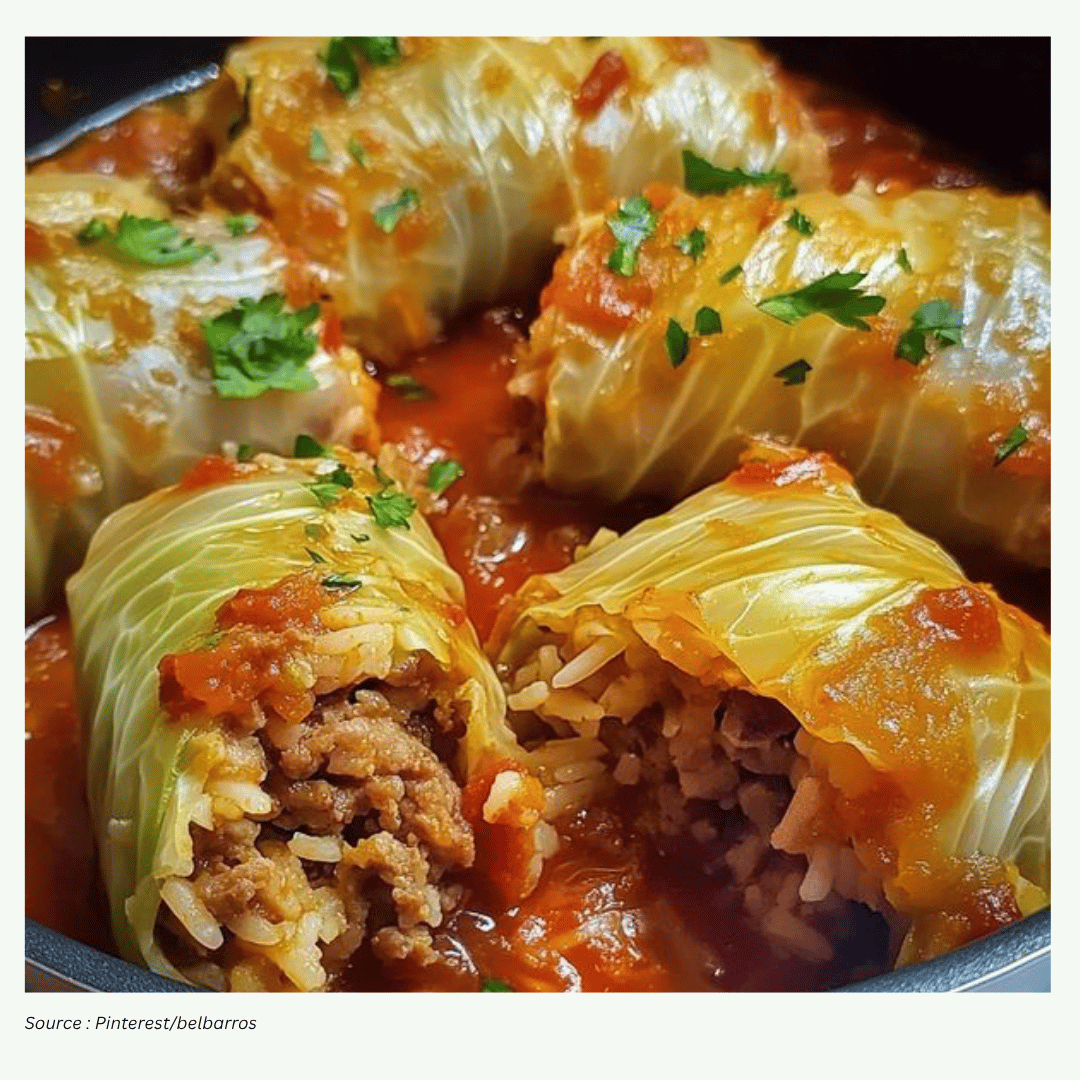
A classic comfort dish: what golabki are
Stuffed cabbage rolls—often referred to as golabki—are a traditional Polish comfort food built around a simple idea: tender cabbage leaves wrapped around a savory filling, then baked and finished with tomato sauce. The result is hearty without being complicated, and it’s the kind of meal that feels especially satisfying on a cold night.
At their core, these rolls are made from cabbage leaves that are softened, filled with a mixture that typically includes ground meat and rice, and baked until the cabbage becomes tender. A tomato sauce is added on top to bring everything together, delivering a familiar sweet-and-sour note that many people associate with Polish-style cabbage rolls.
Like many Eastern European dishes, golabki rely on straightforward ingredients, but the payoff is deep comfort and a lot of flavor. They’re also a natural fit for family meals—both because they’re filling and because they can be made in advance, which makes them practical for gatherings or busy schedules.
Why this dish resonates: tradition, memory, and a restaurant benchmark
Food memories often shape what we consider “the best” version of a dish. In many families, stuffed cabbage rolls are tied to childhood dinners, holidays, or the kind of restaurant meal that becomes a reference point for years. In one home-cooking story, a request for cabbage rolls came immediately when deciding what to serve alongside homemade pierogies—proof that golabki can feel like the obvious companion to other Polish favorites.
That request was fueled by nostalgia for a beloved restaurant version of Polish cabbage rolls—one that was remembered as exceptional, and missed once it was no longer available. Recreating a dish like that at home is a familiar challenge: you’re not only cooking dinner, you’re trying to match a taste memory. The approach here is to keep the dish traditional in spirit while making a small adjustment to boost flavor.
Filling choices: beef and rice, with pork for added flavor
You’ll see variations of stuffed cabbage rolls across different cuisines and households. Many versions focus on a combination of ground beef and rice. In Polish-style golabki, it’s also common to see a blend of meats, and one particularly flavorful approach is to use both ground beef and ground pork in the filling.
Adding pork to the beef-and-rice mixture is a small change that can make the filling taste richer and more rounded. The rolls remain familiar and traditional, but the meat blend can provide an extra layer of savoriness that stands up well to tomato sauce and baked cabbage.
While there are different origin stories associated with stuffed cabbage—one belief links an early version to Jewish food traditions featuring beef, rice, and raisins—the Polish interpretation highlighted here is defined by its meat mixture (beef and pork) and a sweet-sour tomato sauce. The key point is not to settle debates about culinary history, but to understand what makes the Polish version distinctive on the plate.
The cabbage challenge: how to remove leaves without tearing
One of the most common frustrations when making cabbage rolls is dealing with the cabbage itself. Pulling raw leaves from a whole head can be difficult, and even with care, tearing is likely. Fortunately, there’s a reliable method that makes the process far easier and sets you up for neat, workable leaves.
The practical approach is to cut off the root end and submerge the entire cabbage head in a pot of boiling water for about five minutes. This brief boil softens the leaves, making them tender enough to peel away more easily. Softened leaves are also more flexible, which helps them wrap around the filling without splitting.
This step may feel like a small piece of prep, but it’s central to the success of the dish. When the leaves are properly tender, rolling becomes straightforward and the baked texture is more consistent. If they’re not softened enough, the cabbage can remain tough and the rolls can be harder to assemble.
Assembling and baking: simple, home-friendly technique
Once the cabbage leaves are softened and separated, the rest of the recipe follows a comforting, logical rhythm: fill, roll, arrange, sauce, and bake. The rolls are baked in the oven, which allows the cabbage to finish tenderizing while the filling cooks through and the tomato sauce melds into the dish.
The overall result is what many people want from a traditional baked casserole-style meal: a cohesive dish where each component supports the others. The cabbage becomes soft and savory, the meat-and-rice filling turns hearty and satisfying, and the tomato sauce adds moisture and a sweet-sour balance.
Because the method is simple, it’s approachable even if you haven’t made cabbage rolls before. The main learning curve is handling the cabbage leaves, and once that step is under control, the rest is largely assembly and patience while the oven does its work.
Make-ahead flexibility: prep today, bake tomorrow
Stuffed cabbage rolls are especially useful for cooks who like to plan ahead. You can assemble the rolls up to a day in advance, cover them, and keep them in the refrigerator until you’re ready to bake. This make-ahead option is a major advantage for dinner parties, holiday meals, or any day when you want a home-cooked dish without doing all the work at the last minute.
Preparing the rolls ahead of time can also make the process feel more manageable. You can soften the cabbage, mix the filling, and roll everything when you have time—then simply bake when it’s convenient. The dish still delivers that fresh-from-the-oven comfort, but with less pressure.
Troubleshooting: what to do if the cabbage is still tough
Even with a good plan, cabbage texture can vary. If you bake the rolls and find the cabbage is still firm, the likely cause is that the cabbage wasn’t boiled long enough at the start. The fix is straightforward and doesn’t require starting over.
Continue baking the rolls covered, adding time in 10-minute increments until the cabbage softens. Keeping the dish covered helps retain moisture and heat, allowing the leaves to become tender without drying out the filling.
This is a helpful reminder that cabbage rolls are forgiving. If the texture isn’t perfect at first, a little more time—especially under cover—often brings everything into the tender, comforting range you want.
Serving ideas: lean into comfort-friendly sides
Stuffed cabbage rolls are already a complete-feeling meal, thanks to the combination of cabbage, meat, rice, and sauce. Still, many people like to serve them with a side dish, particularly when building a larger comfort-food spread.
A useful guideline is to “steer into comfort” when choosing what to serve alongside golabki. The dish has a warm, homey character, and it pairs naturally with other hearty, cozy foods. If you’re serving pierogies, for instance, cabbage rolls can fit right in as part of a traditional, satisfying menu.
Because the rolls are sauced and baked, sides that complement that richness—rather than compete with it—tend to work well. The goal is a balanced plate that still feels like comfort food from start to finish.
What makes this version feel special
Many cabbage roll recipes share the same basic structure, but small choices can make a version stand out. Here, the defining elements are:
- A traditional Polish approach featuring baked cabbage leaves, a meat-and-rice filling, and tomato sauce.
- A beef-and-pork blend for added flavor compared with using only one ground meat.
- A sweet-sour tomato sauce profile that’s frequently associated with Polish-style cabbage rolls.
- A practical cabbage-prep method (boiling the whole head briefly) to make leaf removal easier and reduce tearing.
- Make-ahead convenience that allows you to assemble the rolls a day early and bake when needed.
Taken together, these points describe a dish that is both rooted in tradition and tuned for home cooking. It’s not fussy, but it’s thoughtful—especially in the way it handles the most common pain point (cabbage leaves) and in the choice to blend meats for a fuller taste.
A dish for nostalgia—or for making new memories
Stuffed cabbage rolls have a way of connecting people: to family kitchens, to old neighborhood restaurants, or simply to the kind of meal that feels like it belongs at a shared table. For those who grew up with golabki, the appeal can be intensely nostalgic. For those trying it for the first time, it can become the start of a new tradition—a recipe that returns whenever the weather turns cold or whenever comfort food is the goal.
What’s most notable about this dish is how it manages to be both substantial and simple. With softened cabbage leaves, a filling of ground meat and rice, and a tomato sauce baked over the top, it delivers the kind of satisfying dinner that doesn’t require complicated techniques—just a bit of time and care.
If you’re looking for a traditional Polish meal that feels special without being difficult, golabki fit the bill. And if you’re trying to recreate a remembered “best-ever” version, the beef-and-pork filling and sweet-sour tomato sauce offer a flavorful, classic direction that many cooks find hits the right notes.