
Taco Egg Rolls: A Crispy, Cheesy Twist for Appetizers or Taco Night
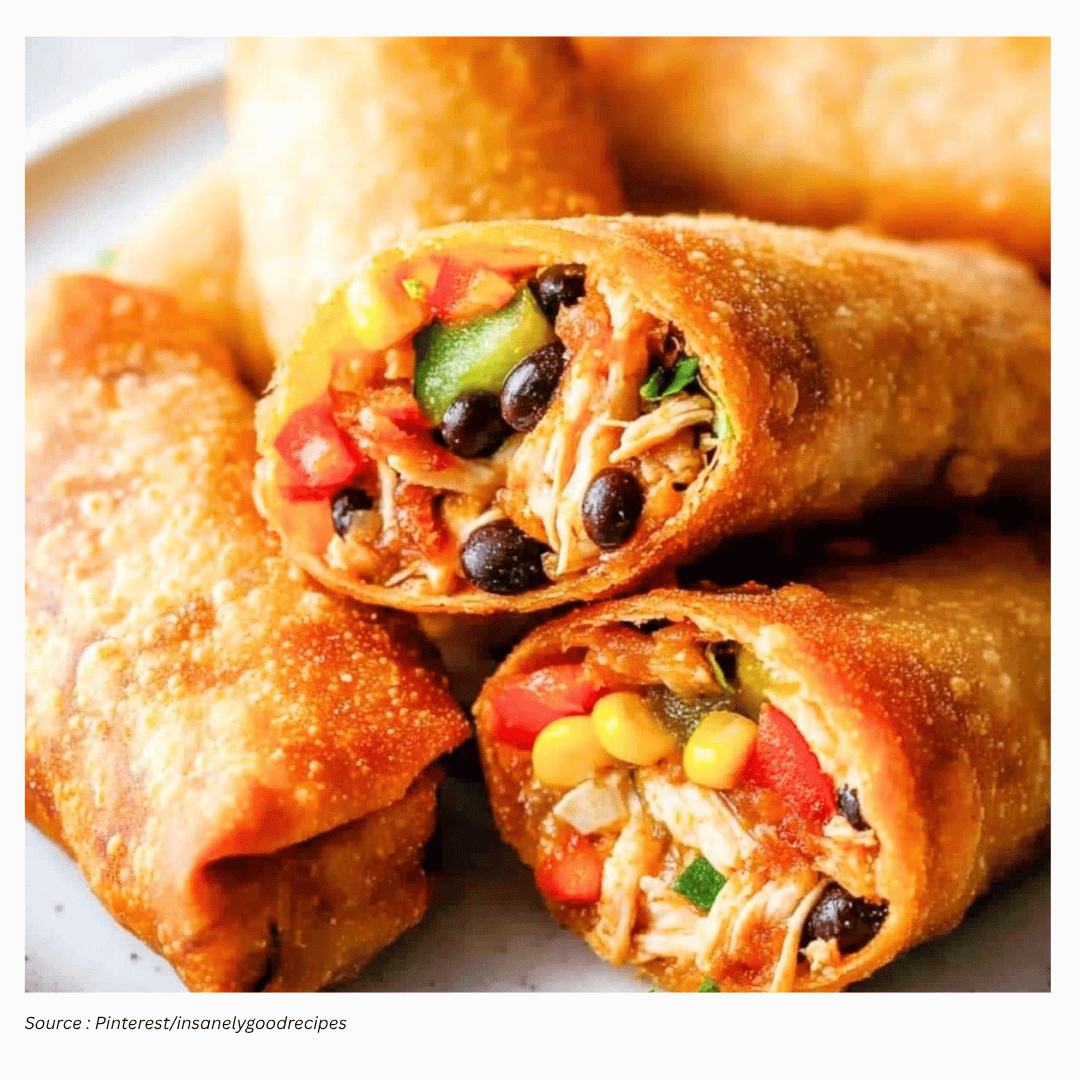
A fun mash-up for finger-food fans
Taco egg rolls are exactly what they sound like: the familiar flavors of taco night—taco meat, onion, pepper, salsa and cheese—rolled into an egg roll wrapper and cooked until crisp. The result is a handheld snack that fits right in with other party-friendly finger foods, but it’s also substantial enough to serve as a casual dinner on Taco Tuesday.
They aren’t technically tacos, yet the appeal is immediate: everything you like about tacos is tucked into a neat, sealed roll. The contrast is the point—savory filling inside a crunchy shell—making them a “Mexico meets Asia” style combination that feels playful without being complicated. And because egg rolls are versatile by nature, the concept is easy to adapt to different tastes.
What goes inside taco egg rolls
The core filling is built around taco meat paired with vegetables and a few classic taco-night add-ins. The extracted recipe description highlights taco meat, onion, pepper, salsa and cheese as the key components. Together, they create a filling that’s hearty, slightly saucy, and melty once cooked.
- Taco meat: Cooked beef is used in the method provided.
- Onion: Cooked with the beef to build flavor.
- Pepper: Added after the beef and onion, then cooked with seasoning and salsa.
- Seasoning: Included with salsa and water to bring the mixture together.
- Salsa: Adds moisture and a familiar taco flavor.
- Cheese: Added during assembly so it melts into the filling.
One of the practical benefits of this filling is that it’s made in a skillet and then cooled before wrapping. That cooling step matters: it helps the wrappers stay intact and makes assembly easier and cleaner.
Step-by-step: making the filling
The filling begins on the stovetop. The method provided is straightforward and timed, which helps keep the process predictable even if you’re making these for a gathering.
- Cook the beef and onion over medium-high heat in a skillet for about 7 minutes.
- Add the pepper, seasoning, salsa and water.
- Continue cooking until the water has evaporated.
- Set the mixture aside to cool before assembling the egg rolls.
That final instruction—cooling the mixture—is a small step that pays off. A cooler filling is easier to portion, easier to roll, and less likely to soften the wrapper before cooking.
How to assemble and fold the egg rolls
Once the filling is ready, assembly is a repeatable process. The method describes a specific portion size and a clear folding sequence to help seal everything in.
- Lay an egg roll wrapper on a work surface.
- Add 2 tablespoons of cheese and 2 tablespoons of beef mixture to the bottom corner.
- Lift the bottom corner over the filling.
- Wet the left and right corners and fold them toward the center.
- Wet the seam and roll up so it is sealed.
- Repeat with the remaining wrappers.
The key technique here is moisture: wetting the corners and seam helps the wrapper adhere to itself so the roll stays closed during cooking. In the provided discussion, one commenter also mentions using egg to seal the wrappers, reinforcing the idea that a reliable seal is essential when you’re frying or baking a filled wrapper.
Frying method: classic crispiness
Frying is the traditional approach for egg rolls, and it’s the method that delivers the most pronounced crunch. The instructions call for heating oil to a specific temperature and cooking in batches for even browning.
- Preheat oil in a Dutch oven or skillet to 350°F.
- Working in batches, fry the egg rolls for 2–3 minutes per side or until golden brown.
- Remove and set on a paper towel-lined plate.
Cooking in batches keeps the oil temperature steady, which helps the wrappers cook evenly. Draining on paper towels helps remove excess oil, keeping the final texture crisp rather than greasy.
Baked taco egg rolls: an oven option
If you’d rather use the oven, the extracted content includes a baking method designed to crisp the exterior while warming the filling through. The oven temperature is higher than you might expect, which helps the wrapper brown.
- Preheat the oven to 425°F.
- Line a baking sheet with the taco egg rolls.
- Brush with a little oil on both sides.
- Bake for 12–15 minutes, or until golden brown.
Brushing with oil is part of what helps baked egg rolls mimic the color and crispness you’d normally get from frying.
Air fryer method: crisp results with less fuss
Air fryers are well-suited to egg roll wrappers because circulating heat can brown and crisp the outside quickly. The extracted content includes two sets of air-fryer instructions, which appear to reflect different preferences for time and temperature.
Air fryer method (350°F):
- Place egg rolls in the air fryer basket.
- Spray the egg rolls with cooking spray.
- Set the air fryer to 350°F and cook for 6 minutes.
- Flip all egg rolls and spray again with cooking spray.
- Cook for an additional 5 minutes.
Air fryer method (400°F):
- Spray the egg rolls.
- Set the air fryer to 400°F and cook for 6 minutes.
- Flip and cook another 6 minutes.
In both versions, spraying helps the wrapper brown and crisp. Flipping midway promotes even color on both sides.
Serving ideas: appetizer, Taco Tuesday, or leftovers
Part of what makes taco egg rolls appealing is their flexibility. They can be served as a party appetizer—especially for anyone who loves finger foods—or as a main meal on taco night. Because they’re self-contained, they also travel well from kitchen to table and are easy to portion for a group.
The extracted content also emphasizes that they work great as leftovers, making them a practical option if you want dinner for multiple nights. That’s a notable advantage over some taco-night setups where components can lose texture after refrigeration.
Make-ahead and storage: planning for busy days
Taco egg rolls can be prepped in advance, which is helpful when you’re hosting or simply trying to streamline weeknight cooking. In the included Q&A, a reader asks whether they can be made ahead of time and fried the next day; the answer provided is yes, and that they can be stored in the fridge for up to 24 hours before cooking.
- Make ahead: Assemble and refrigerate for up to 24 hours, then cook when ready.
That simple window—up to a day—can make party prep much easier, since the messy part (filling and rolling) can be done earlier.
Freezing instructions: before or after cooking
Freezing is another option highlighted in the extracted content, and it’s offered in two forms: freezing the egg rolls before cooking or after cooking. Either way, the goal is to keep them airtight and protect texture.
Freeze before cooking:
- After wrapping, place egg rolls on a baking sheet and freeze.
- Once frozen, transfer to an airtight container.
- Store up to 3 months.
- Defrost in the fridge the night before cooking.
Freeze after cooking:
- Let egg rolls come to room temperature.
- Transfer to an airtight container and freeze.
- To reheat, bake at 350°F for 8–10 minutes or until warmed through.
This two-track approach is useful because it lets you choose what fits your routine: freeze a batch as a ready-to-cook option, or freeze cooked egg rolls for quick reheating later.
Reheating for crispness
For refrigerated leftovers, the extracted content recommends using the oven to bring back crispness rather than relying on methods that might soften the wrapper. The reheating instructions are short and specific:
- Preheat oven to 350°F.
- Place egg rolls on a baking sheet.
- Bake for 4–5 minutes, or until crisp and warm.
This quick reheat is designed to warm the center while keeping the outside crunchy.
Ingredient flexibility and small adjustments
The extracted content notes that, like any recipe, you can mix up some of the ingredients, and it introduces the idea of variations. While the specific variation list isn’t included in the provided text, the overall guidance is clear: the format is forgiving. Once you understand the base method—cook a taco-style filling, cool it, wrap it with cheese, then fry/bake/air-fry—you can adjust within that framework.
There’s also a practical note about seasoning: when asked how much water to use, the response is, “However much the seasoning packet asks for. It is usually about 2/3 cup.” That suggests the recipe is designed to work with a standard seasoning packet’s guidance, rather than requiring a fixed amount that might vary by brand.
Why the technique works
What makes taco egg rolls successful is less about novelty and more about structure. The wrapper provides crunch and containment; the filling brings familiar taco flavors; and the cheese acts as a binder once melted. The method also builds in a few safeguards—cooling the filling, sealing the seams, and cooking at set temperatures—that help prevent leaks and keep the rolls intact.
It’s also a format that fits several cooking styles. If you love the traditional crunch of fried egg rolls, the stovetop method delivers. If you want a simpler setup, baking works. If you’re aiming for speed and crispness with minimal oil, the air fryer is an option, with two time-and-temperature approaches provided.
At-a-glance cooking options
- Fry: 350°F oil, 2–3 minutes per side, drain on paper towels.
- Bake: 425°F, brush with oil, 12–15 minutes until golden.
- Air fry: 350°F (6 minutes + flip + 5 minutes) or 400°F (6 minutes + flip + 6 minutes), spraying for browning.
A practical addition to your appetizer rotation
If you’re someone who gravitates toward handheld snacks—pizza rolls, empanadas, wings, or other party foods—taco egg rolls slide naturally into that lineup. They’re familiar enough to please a crowd, but different enough to feel like a change of pace. And because they can be made ahead, refrigerated for up to 24 hours before cooking, frozen either before or after cooking, and reheated quickly in the oven, they’re designed to be as convenient as they are crunchy.
Whether you serve them as an appetizer platter or turn them into the centerpiece of taco night, the method stays the same: cook a flavorful beef-and-vegetable filling with salsa and seasoning, cool it, wrap it with cheese, seal it well, and cook until golden and crisp.