
Smoked Pulled Beef Tacos: A BBQ Twist on Taco Night
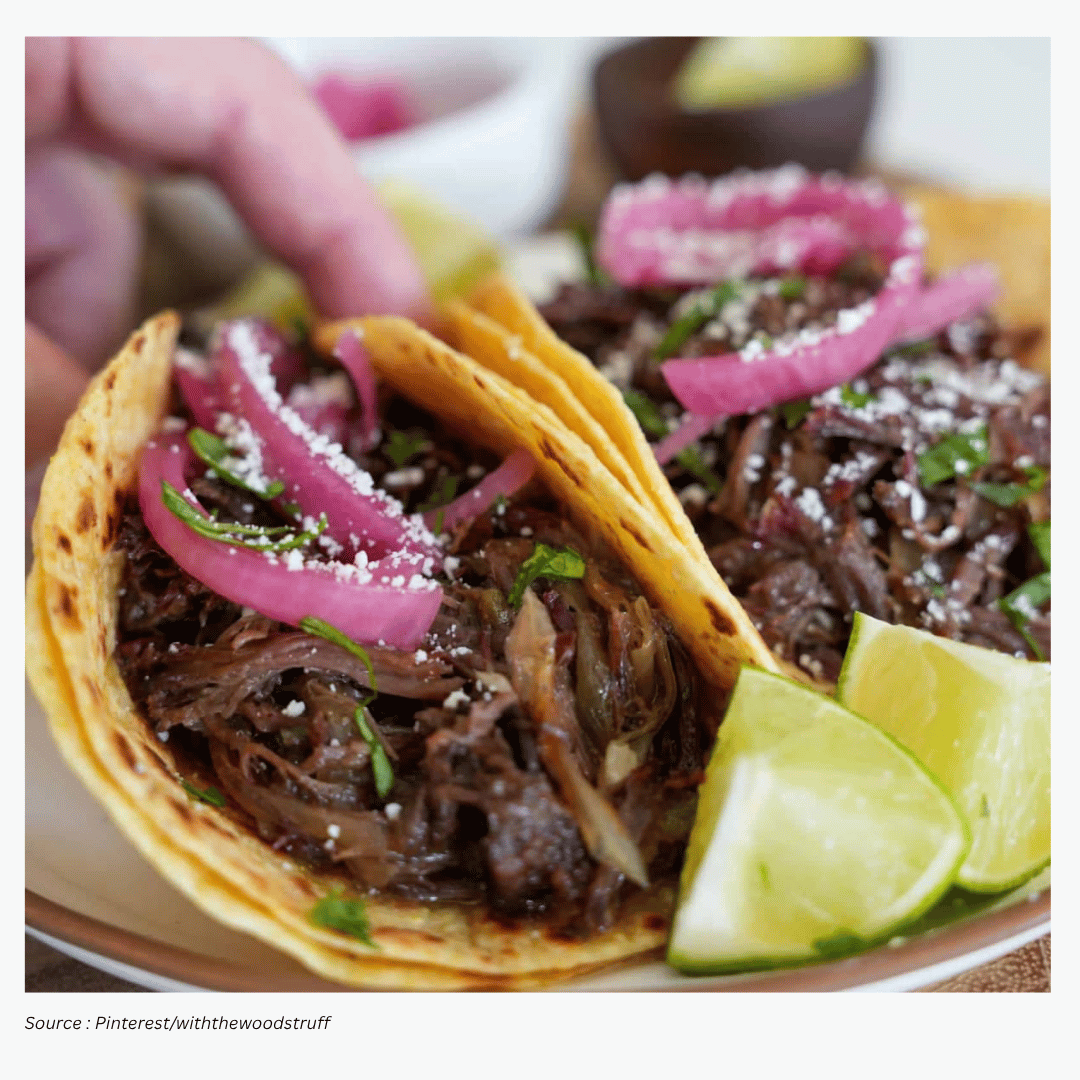
A mash-up worth making: tacos meet barbecue
Tacos are one of those meals that rarely need an excuse. They can be quick, they can be festive, and they can be endlessly customizable—whether you’re in the mood for something like chorizo, rockfish, crispy chicken, or spicy shrimp. But there’s another direction that fits right into taco night while still feeling like a change of pace: combining Mexican-style assembly with barbecue-style meat.
Smoked pulled beef tacos do exactly that. The idea is straightforward: smoke a beef roast until it becomes tender enough to shred easily, toss the pulled meat with barbecue sauce, then load it into tortillas and finish with whatever toppings you like. The result is familiar (because it’s still a taco) but also distinct (because of the smoky, slow-cooked beef and the barbecue sauce).
What makes these tacos different
At the center of this recipe is smoked pulled beef—beef that has been cooked low and slow until the connective tissue breaks down and the meat can be shredded. That texture is what makes pulled beef feel so satisfying in a taco: it’s tender, it holds sauce well, and it pairs naturally with crunchy, fresh, or creamy toppings.
Once the beef is smoked and pulled, it’s tossed with barbecue sauce before it ever hits the tortilla. This step is key to the “BBQ meets taco” identity of the dish. Instead of treating the meat as a plain filling and relying on salsa or toppings for flavor, the beef is already seasoned and sauced in a way that leans into barbecue.
From there, the taco build is up to you. The base is tortillas and pulled beef, and everything else is flexible. That’s part of the appeal: you can keep it simple for a weeknight meal or set out a topping spread and let everyone assemble their own.
Choosing the right cut of beef
You don’t need expensive beef to make great pulled beef tacos. In fact, the approach here is the opposite: choose a cut that benefits from long, gentle cooking. The goal is to break down the tissue of the meat so it shreds easily and becomes tender.
Two cuts that work especially well are chuck roast and brisket. They’re well-suited to smoking because the extended time at low temperature helps transform them into meat that “melts in your mouth.” This is also why it’s not necessary to reach for premium cuts like filet mignon or specialty beef—smoking is doing the heavy lifting by turning a tougher cut into something soft and shreddable.
Understanding smoking time and temperature
Smoking meat is often described with rules of thumb, and they can be helpful for planning. A common guideline for smoking beef at 225°F is about 2 hours of cook time per pound. Using that estimate, a 4 lb chuck roast would take roughly 8 hours.
However, this is only a planning baseline. Every cut of meat is different, and cook times can vary widely. A roast might be done in 5 hours, or it could take as long as 14 hours. That variability is normal in low-and-slow cooking, and it’s one reason it helps to build flexibility into your schedule when you’re smoking a roast for tacos.
Because timing can swing, many cooks prefer to start earlier than they think they need to. That way, the beef has time to reach the tenderness needed for shredding without pressure. Once it’s ready, it can be held and served later, or stored for another day.
Equipment options for adding smoky flavor
The equipment you use can have a big impact on the final flavor, particularly because this recipe is built around smoke. If you want the classic smoked character, a smoker is the most direct tool for the job, since it’s designed to maintain low temperatures while delivering smoke over a long period.
That said, there are other ways to get to a similar end result if you don’t have a dedicated smoker. You can use a charcoal or gas grill set up for indirect heat. You can also slow-cook the beef in the oven at a low temperature. And if you’re looking for a set-it-and-forget-it method, a slow cooker can work as well. For a faster pressure-cooked approach, an Instant Pot can be used, and there are shredded beef methods designed specifically for that appliance.
Each method changes the experience slightly, but the core idea remains the same: cook the beef until it’s tender enough to shred, then sauce it and build tacos with your preferred toppings.
The simple assembly: sauce, tortillas, toppings
One reason smoked pulled beef tacos fit so well into home cooking is that the “taco” part is easy once the beef is done. The process is essentially:
- Cook the beef until it shreds easily.
- Pull (shred) the beef.
- Toss it with barbecue sauce.
- Spoon it into tortillas.
- Add your favorite toppings.
That’s it. The main time investment is in the cooking, not the assembly. When the beef is ready, you can go from cutting board to dinner table quickly.
Because toppings are open-ended, these tacos are also a practical choice when feeding a group. You can put the sauced pulled beef in a serving dish, warm some tortillas, and let everyone customize their plate. It’s low-stress and works for a range of preferences.
Planning ahead: making pulled beef in advance
Smoked pulled beef tacos are also friendly to meal prep and leftovers. The pulled beef can be made in advance and stored in the refrigerator for 3 to 4 days. When you’re ready to eat, reheat it gently so it stays juicy and flavorful.
This make-ahead option can be especially helpful given the variability in smoking time. If you smoke the beef earlier in the day (or even the day before), you can serve tacos whenever it’s convenient without trying to time the end of a long cook perfectly.
Why this works for weeknights and weekends
These tacos can feel like a weekend project because smoking a roast can take hours, but they can also make weeknights easier once the beef is cooked. The payoff is that you end up with a versatile filling that can be reheated and served quickly, while still tasting like something that took time and care.
They also fit a wide range of occasions. If you want a casual dinner, keep the topping list short and focus on the smoky beef and barbecue sauce. If you’re hosting, lean into the customizable nature of tacos and offer multiple topping choices so guests can build their own.
A practical guide to getting the texture right
The defining feature of pulled beef is the shred. You’re aiming for beef that comes apart easily, which is the result of breaking down connective tissue through low, slow cooking. This is why chuck roast and brisket are such strong choices: they respond well to extended cooking and become tender rather than drying out quickly.
When the beef is ready, shredding should feel effortless. If it resists shredding, it usually means it needs more time. Since cook time can vary dramatically—from about 5 hours to as long as 14 hours in some cases—it helps to treat tenderness as the real signal rather than the clock.
Serving ideas built around “your favorite toppings”
The beauty of tacos is that the final flavor profile can shift depending on how you top them. With smoked pulled beef tossed in barbecue sauce as the foundation, you can steer the tacos in different directions simply by changing what goes on top.
Because the concept here is explicitly “your favorite toppings,” the best approach is to think in categories and set out a few options from each. Even a small spread can make the meal feel complete and personalized.
- Base: tortillas plus sauced smoked pulled beef
- Finish: toppings chosen to match your preferences and the occasion
Whether you keep it minimal or go all out, the smoky beef remains the centerpiece, and the toppings provide contrast and variety from bite to bite.
Key takeaways before you start
- Smoked pulled beef tacos combine barbecue-style smoked meat with taco-style assembly.
- Chuck roast or brisket are strong choices because they become tender and shred easily with low-and-slow cooking.
- A planning guideline is about 2 hours per pound at 225°F, but actual cook time can vary widely.
- If you don’t have a smoker, you can use indirect heat on a grill, slow-cook in the oven, or use a slow cooker or Instant Pot approach for shredded beef.
- Pulled beef can be made ahead and refrigerated for 3–4 days; reheat gently to keep it juicy.
A smoky twist that still feels like taco night
Smoked pulled beef tacos are a simple idea with a lot of payoff: tender shredded beef with smoky character, coated in barbecue sauce, tucked into tortillas, and finished with toppings you actually want to eat. They’re flexible enough for everyday dinners and satisfying enough for a gathering, and they offer a clear way to bring two favorite food traditions—Mexican-style tacos and barbecue—onto the same plate.
If you’re looking to change up your taco routine without abandoning what makes tacos fun in the first place, this is an easy direction to take: smoke, shred, sauce, and let everyone build their own.